







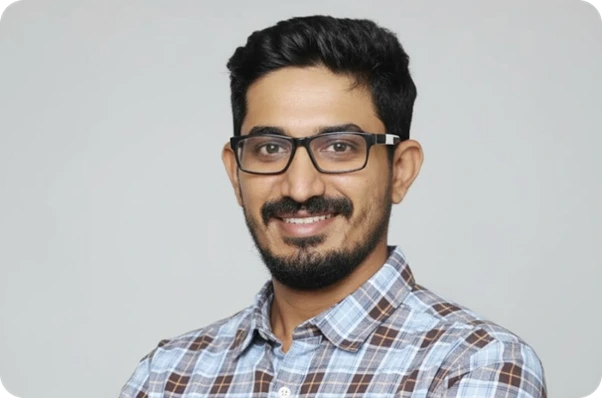
Gaurav is building a software company
Read about the journey of Gaurav Borkar, who started as a hands-on software developer and is now building his own software company.
30 September, 2026
I see two very different versions of the same problem, over and over.
There's the founder who has no one to talk to. Building alone, quietly, with every decision resting entirely on their own judgment because there's simply nobody else in the room. And then there's the founder drowning in the opposite problem — everyone has an opinion, every LinkedIn post has a framework, every coffee chat ends with unsolicited advice, and none of it seems to actually fit their specific situation.
Here's the thing: these are the same problem wearing different clothes. Neither founder has the right people around them. One has too few, the other has too many of the wrong kind.
And the data on this is not subtle. Startups with co-founders are roughly 30% more successful than solo-founded ones, according to Harvard Business Research findings — some analyses put the multiple as high as three times more likely to succeed (RevenueMemo, 2026 business failure statistics). Mentorship alone is linked to a 33% increase in survival rates (Startup Genome, via Keevee 2026), and one analysis found mentored startups are three times more likely to succeed than those going it alone (Revli, 2026 startup failure statistics).
Before you go looking for mentors, here's a genuinely important nuance most articles on this topic skip entirely. Founders today have more access to advice than any generation before them — endless podcasts, frameworks, LinkedIn threads, books. And yet roughly 90% of startups still fail (The Lonely Entrepreneur, 2026).
If advice alone were the missing ingredient, unlimited access to advice should have produced unprecedented success by now. It hasn't. The actual gap isn't a lack of information — it's not knowing which piece of advice, from which person, actually applies to your specific situation, at your specific stage.
A brilliant growth hacker's advice on scaling paid acquisition means very little if you haven't found product-market fit yet. A seasoned operator's playbook for managing a 200-person team isn't useful when you're deciding whether to hire your first employee. The advice isn't wrong. It's just not for you, not yet.
These three words get used interchangeably, and that's part of why founders end up with the wrong kind of support. The distinction is worth understanding:
Knowing which one you actually need, right now, saves you from mismatched expectations later — like expecting a casual mentor to show up with the intensity of a co-founder, or asking an advisor to fill a role that really needs someone in the trenches with you daily.
The mentor who's right for you at idea stage is often the wrong one once you're raising a Series A — and vice versa. Stage-matched guidance consistently outperforms generic advice from someone impressive but misaligned with where you actually are:
Impressive credentials don't automatically translate to useful guidance for your exact moment. Stage fit matters more than pedigree.
Knowing you need the right person is one thing. Finding them is where most founders get stuck — particularly if you're building this alongside a full-time job, or you're new to a city's startup scene entirely.
This is genuinely one of the things a real network solves that a solo Google search can't. Being part of a community with real people at every stage — some further ahead, some right where you are — means the right introduction is often one conversation away rather than a stranger's cold LinkedIn message. It's the same principle we talked about in going from idea to actual business: surrounding yourself with the right people isn't a nice-to-have, it's structural to whether this works.
At Utrecht Center for Entrepreneurship, part of the wider Global Centers for Entrepreneurship network, this is genuinely what we're built for — connecting founders with a community of 8,400+ professionals across every stage, industry, and kind of expertise, so the right introduction doesn't depend on luck.
Don't hesitate to fill in this short form to see exactly how we can help you find the people who fit where you are right now.
The founders who grow fastest aren't the ones with the most advice available to them — everyone has access to that now. They're the ones who found the few right people, for their actual stage, and let go of the noise from everyone else.
If you're currently isolated, that's fixable. If you're currently overwhelmed with well-meaning but mismatched advice, that's fixable too — and it's usually the same fix: find fewer people who actually fit where you are, and lean on them properly.
Join 8,400+ companies using our Connect & Grow program to find capital, partners, and new markets.
Free Online IntakeFree application. No obligations.

Can't stop thinking of business ideas? You're not alone — 305 million startups launch globally each year. Here's how to actually build one.
The money is not the problem — you are. There are 300,000+ active angel investors looking for their next opportunity, and what they back is founders, not ideas.
Money is rarely the real barrier to startup funding. Clarity, preparation, and knowing where to look matter more — here's how to find the right investor in 2026.
Read about the journey of Gaurav Borkar, who started as a hands-on software developer and is now building his own software company.
Passionate about UI/UX design since 2015, I bring extensive experience to create engaging digital experiences tailored to your project needs.
From Dubai's Business Landscape to Global Opportunities: How Nesrine Leveraged GCE's Network to Scale Across MENA