







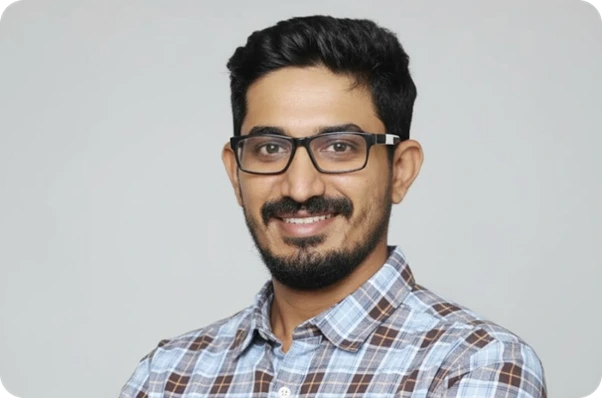
Gaurav is building a software company
Read about the journey of Gaurav Borkar, who started as a hands-on software developer and is now building his own software company.
30 September, 2026
When I tell people I run an entrepreneurship center in Utrecht, the reaction is almost always the same. A polite nod, a small pause, and then: “So... what is that, exactly?”
Fair question. The same two words get used for a university department, a city-funded office, a coworking space with a nice logo, and a global network like ours. They are not the same thing, and if you’re a founder deciding where to spend your limited time, mixing them up can cost you months.
And time is the one thing early-stage founders can’t afford to lose. When researchers dig into why startups fail, three reasons come up again and again: no real market need (42%), running out of cash (29%), and not having the right team (23%) (Revli, 2026 startup failure statistics). Look at that list again. Not one of them is “not enough ideas.” They are problems of access: to customers, to money, to the right people. That access gap is exactly what an entrepreneurship center is meant to close.
An entrepreneurship center is an organization that helps people start, run, and grow businesses by giving them education, mentoring, connections, and access to resources like workspace, funding, or clients. Some sit inside universities. Some serve a city or region. And some, like Global Centers for Entrepreneurship, connect founders to real business deals across borders.
Same name, very different models. That’s the part almost nobody explains, so let’s do it properly.
| Type | Built for | What you typically get | Success typically looks like |
|---|---|---|---|
| University centers | Students, alumni, faculty | Courses, coaching, campus resources, pitch competitions | A graduate who launches, or a project that gets funded |
| Community and regional centers | Local founders, often underserved groups | Mentoring, workspace, local advice, regional connections | A stronger local business base |
| Network and dealmaking centers | Working founders and companies ready to grow | Introductions to clients, partners and investors, often across borders | A deal that actually closes |
University centers. This is what most search results show you. They’re built around learning: courses, coaching, campus resources, pitch competitions. The University of Michigan’s Center for Entrepreneurship is a good example, focused on giving students access to classes, coaching, and industry connections. Babson’s Blank Center reports working with more than 470 entrepreneurs behind over 385 businesses in a single year. If you’re a student or an alum, that’s a great place to start. If you’re a founder with a running business and no campus connection, it can be hard to find your way in.
Community and regional centers. These exist to strengthen a specific place or group. The Houston Area Urban League’s Entrepreneurship Center pairs each entrepreneur in its cohort with an experienced business mentor, with a particular focus on entrepreneurs of color. The Entrepreneurs’ Center in Dayton describes itself as an economic development organization that connects investors with local startups and offers entrepreneur-in-residence support. The hands-on help is real. The reach usually stops at the edge of the region.
Network and dealmaking centers. The newest model, and the one closest to what we do. Success is measured less by workshops attended and more by whether a founder ends up in front of the right client, partner, or investor, often in another country. Less classroom, more marketplace.
Depending on the type, you’ll usually find some mix of these:
The numbers say it can. Mentorship is linked to a 33% increase in startup survival rates (Startup Genome, via Keevee), and taking part in an accelerator-style program is associated with a 10 to 15% lower failure rate (RevenueMemo, 2026).
A fair caveat: founders who go looking for support are probably the same ones who work hardest anyway, so these numbers don’t prove a center alone makes the difference. But the direction is hard to ignore. The founders I see making real progress usually have a few good people in their corner early on.
Before you join anything, ask:
If a center can’t answer these clearly, that tells you something.
We’re in that third category. Our headquarters and flagship center is in Amsterdam, and we’re building local centers around the world, with the goal of reaching 100+ over the next five years. Utrecht, where I’m based, is one of them. Every center connects to the same global network: 8,400+ professionals, investors, and companies across 55+ countries.
The engine underneath is our AI-powered Dealmaking Engine, which matches founders and businesses with high-value opportunities. Verified businesses only. How it works is deliberately simple:
For a real example, read how Nesrine used the network to scale across MENA. The intake is free and comes with no obligations.
Some people read all of this and think: my city needs one of these. If that’s you, there’s a way to get involved. Apply to become a co-founder and tell us about your city.
Entrepreneurship center is a broad label, and the model behind it matters more than the name. Some teach you. Some support you locally. Some connect you to deals. All three are useful, at different moments.
Just choose on purpose. Ask the five questions, look for real outcomes, and don’t be shy about asking what a center actually costs you. And if what you need right now is people and deals rather than another class, start with our free intake. It takes about fifteen minutes.
Join 8,400+ companies using our Connect & Grow program to find capital, partners, and new markets.
Free Online IntakeFree application. No obligations.
Money is rarely the real barrier to startup funding. Clarity, preparation, and knowing where to look matter more — here's how to find the right investor in 2026.
More advice isn't the answer — the right advice, from the right person, at the right stage, is. Here's how to actually find it.
Can't stop thinking of business ideas? You're not alone — 305 million startups launch globally each year. Here's how to actually build one.
Read about the journey of Gaurav Borkar, who started as a hands-on software developer and is now building his own software company.
Passionate about UI/UX design since 2015, I bring extensive experience to create engaging digital experiences tailored to your project needs.
From Dubai's Business Landscape to Global Opportunities: How Nesrine Leveraged GCE's Network to Scale Across MENA